Because “I’ll Figure It Out Later” Is Not a Business Strategy
Starting with Printful feels exciting at first—until you realize there are product settings, shipping profiles, pricing decisions, store connections, mockups, and enough open tabs to make your laptop question your life choices.
This is where most new sellers either get overwhelmed or start clicking random buttons and hoping confidence counts as strategy.
It does not.
A clean setup saves time, prevents expensive mistakes, and makes your shop feel professional from the beginning. The goal is not perfection. The goal is building a system that works.
This checklist helps you do exactly that.
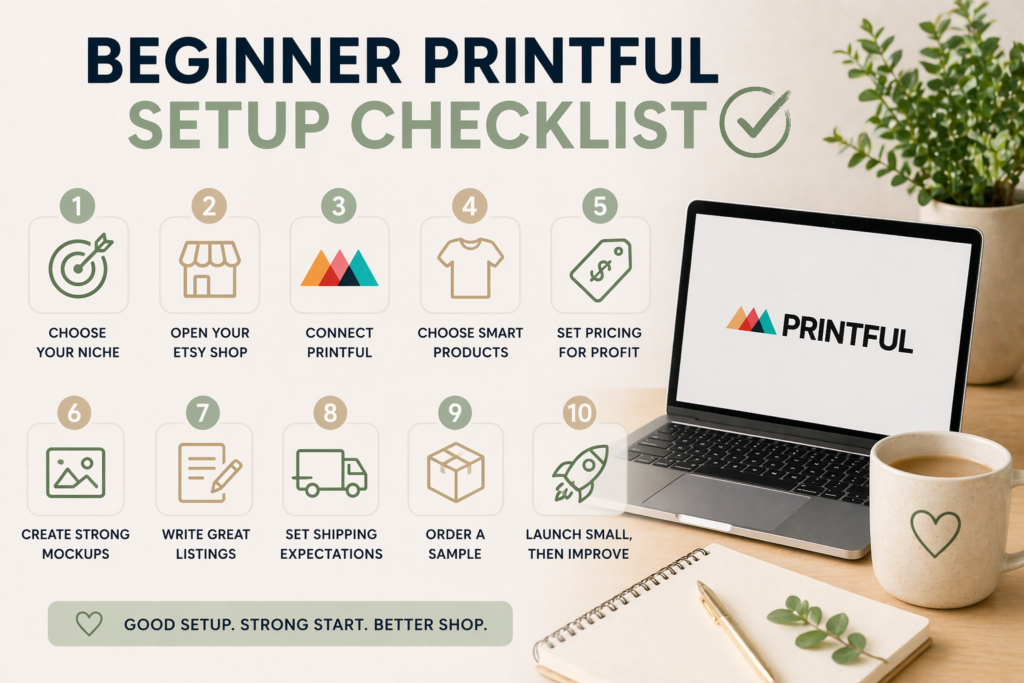
Choose Your Shop Niche First
Before creating products, decide what your shop actually sells.
Do not start with the idea that you want to sell everything. That usually turns into selling nothing clearly.
A specific niche makes your shop easier to understand, easier to market, and much easier for buyers to trust.
Strong examples include teacher gifts, nurse gifts, dog lover apparel, coffee-themed products, book lover merch, small business gifts, and seasonal gift products.
Specific shops convert better than general shops because clarity sells faster than confusion ever will.
Open Your Etsy Shop Properly
Before Printful can do anything, your Etsy shop needs to be set up correctly.
This means more than just opening the account. Your shop should have a clear name, clean branding, a banner, profile photo, policies, and basic trust signals that make buyers feel comfortable purchasing.
Even simple professionalism matters.
Your store should feel like a real business, not a temporary experiment built at midnight with caffeine and hope.
Trust starts here.
And trust affects everything.
Create and Connect Your Printful Account
Next, create your Printful account and connect it directly to Etsy.
This is where the real automation begins.
Once connected, your products, listings, and fulfillment process become much easier to manage because orders can move between both platforms smoothly.
This step feels small, but it is actually the backbone of your workflow.
Take your time here.
A strong connection saves future problems.
Choose Smart Starter Products
One of the biggest beginner mistakes is trying to launch too many products too fast.
Do not start with fifty listings.
Start with a few strong products that are easy to understand, easy to price, and strong enough to create real profit.
Good beginner products often include embroidered hats, premium sweatshirts, tote bags, mugs, stickers, wall art, and personalized gifts.
These products usually have better perceived value and healthier margins than cheap low-ticket items.
Start with stronger products, not just cheaper ones.
That decision matters.
Set Pricing for Profit
This is where many beginners accidentally build a hobby instead of a business.
Pricing should include product cost, Etsy fees, transaction fees, shipping costs, and actual profit margin.
Do not guess.
Do not emotionally price things.
And please do not sell a premium sweatshirt for twelve dollars and call it “great exposure.”
Revenue is not profit.
Profit is what keeps the business alive.
This step deserves real attention.
Because underpricing creates burnout faster than almost anything else.
Create Strong Mockups
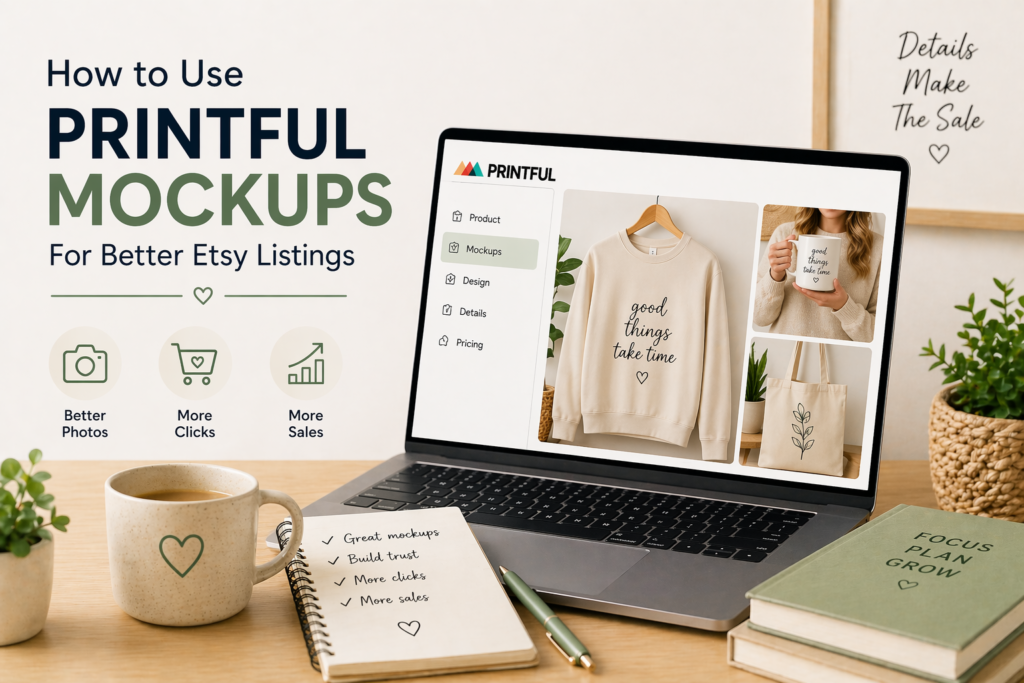
Your mockups sell before your descriptions do.
Buyers trust what they see long before they trust what they read.
Clean, professional, lifestyle-based mockups help customers imagine the product in real life, which increases both trust and conversion rates.
A mug on a styled desk sells better than a mug floating on a blank white background. A cozy sweatshirt shown in a real setting feels more valuable than a flat product image.
Tools like Canva, Kittl, and Placeit can make this process much stronger.
Better mockups protect better pricing.
That matters more than people realize.
Write Better Titles and Descriptions
Your listing title needs clarity.
Your description needs trust.
Do not turn your title into a keyword soup that feels impossible to read. Buyers still need to understand what they are actually buying.
Descriptions matter too. Many sellers ignore them, assuming no one reads them.
People absolutely read them—especially when deciding whether your shop feels legitimate.
Strong titles improve SEO.
Strong descriptions improve trust.
Both improve sales.
This is not the place to be lazy.
Set Shipping Expectations Clearly
Customers do not like surprises.
Especially shipping surprises.
Make sure your production times, shipping estimates, and shop policies are clear from the beginning.
Even though Printful handles fulfillment, your customer experience still reflects on your business.
Fast communication and realistic expectations protect reviews, reduce complaints, and make the shop feel reliable.
Good reviews are expensive to rebuild once they are damaged.
Prevention is easier.
Always.
Order a Sample First
Before launching important products, order a sample.
Please.
Check the print quality, colors, sizing, packaging, and the actual customer experience from beginning to end.
Optimism is not quality control.
Samples prevent regret.
Especially before holiday season.
Especially before ads.
Especially before your mother buys one and gives very honest feedback.
Testing first saves money later.
Always worth it.
Launch Small, Then Improve
Do not wait for perfect.
Launch with a strong foundation and improve from there.
Many successful shops started with five strong listings, not fifty average ones.
The goal is momentum, not endless preparation.
Your first version does not need to be final.
It just needs to exist.
Progress builds faster than perfection ever will.
That is how real businesses grow.
My Honest Advice
Most Printful mistakes do not come from bad products.
They come from weak systems.
Poor pricing, weak mockups, random product choices, and unclear niches create more problems than almost anything else.
Fixing the setup early saves months of frustration later.
That is the real shortcut.
Not hacks.
Not trends.
Systems.
That is what builds sustainable shops.
Final Recommendation
Start simple.
Choose a clear niche.
Use a few strong products.
Price for profit.
Create better mockups.
Order samples.
Build trust.
Improve as you go.
That is the real beginner setup strategy.
Not chaos.
Not guesswork.
A real system.
And that is what turns Printful from “something I’m trying” into an actual business.